Coordinatech ERP for Managing Temporary Work in Building Constructions
- Published on
- Duration
- 6 Months
- Role
- Full-Stack Developer (Frontend & Backend)
- Atmosphere
- Collaborative & Innovative
- Technology
- Django, React, Next.js, PostgreSQL, RabbitMQ, Docker, NFC, OpenAI
Project Overview
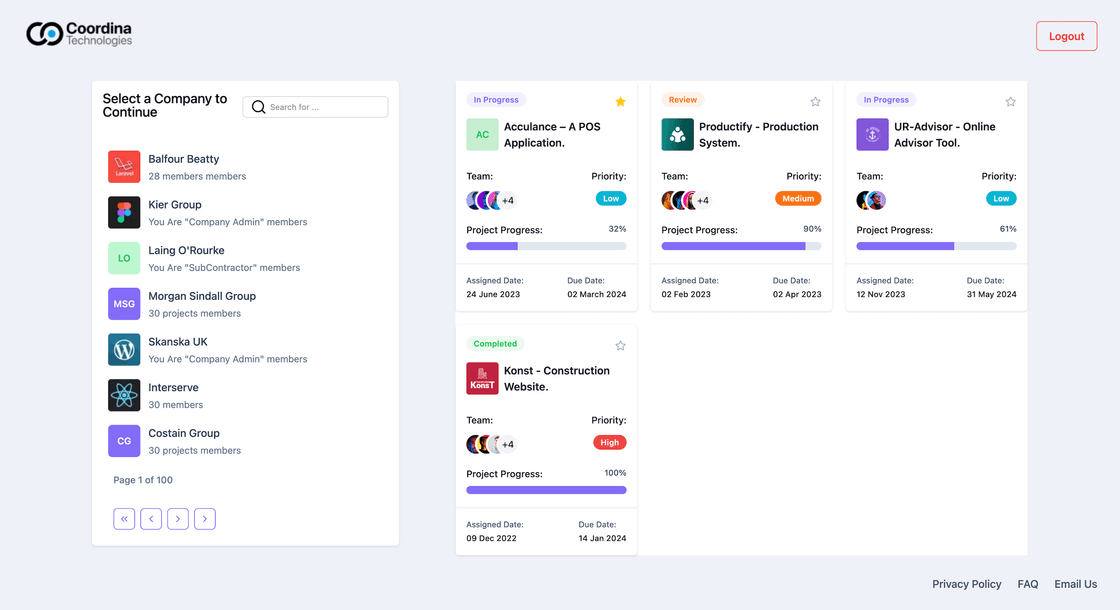
I developed Coordinatech ERP, a robust SaaS platform designed to manage temporary work in building constructions. The system supports multiple roles such as scaffolding, plumbing, electrical work, and more. It is used by multiple companies, projects, and subcontractors, enabling seamless collaboration and resource management.
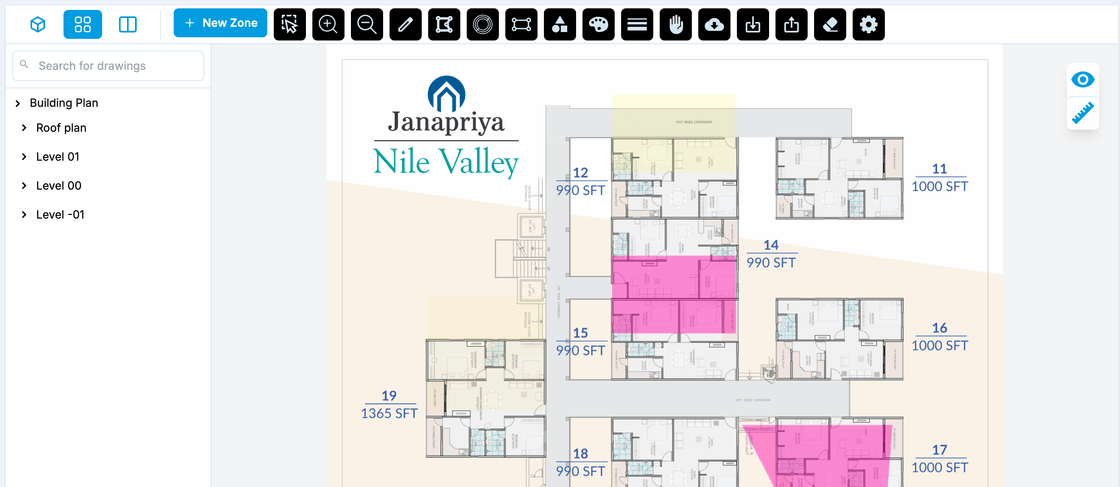
The ERP features a powerful drawing module for managing assets and blueprints, allowing users to draw shapes, polygons, and annotations directly on blueprints. Additionally, it integrates with NFC cards for managing user access to construction sites, buildings, and specific floors, ensuring secure and efficient access control.
Key Features
Multi-Role and Multi-Company Support:
- Supports multiple roles (e.g., scaffolding, plumbing, electrical) and multiple companies.
- Enables subcontractors and project managers to collaborate efficiently.
Drawing Module:
- Allows users to upload and manage blueprints.
- Provides tools to draw shapes, polygons, and annotations on blueprints.
- Tracks changes and updates to blueprints in real-time.
NFC Integration:
- Integrates with NFC cards for access control.
- Manages user access to specific sites, buildings, and floors.
- Logs access events for security and compliance.
Project Management:
- Tracks temporary work across multiple construction projects.
- Assigns tasks, monitors progress, and manages resources.
Asset and Resource Tracking:
- Tracks construction assets (e.g., scaffolding, tools) and their usage.
- Manages inventory and resource allocation.
Real-Time Collaboration:
- Enables real-time updates and communication between teams.
- Provides a centralized dashboard for project tracking.
Reporting and Analytics:
- Generates reports on project progress, resource usage, and access logs.
- Provides insights for better decision-making.
Microservices Architecture:
- Built with Python Django and RabbitMQ for scalable and efficient task handling.
- Uses PostgreSQL for structured data and MongoDB for unstructured data.
Modern Frontend:
- Developed with React, Next.js, TailwindCSS, and DaisyUI.
- State management handled by Redux.
CI/CD Pipeline:
- Implemented GitHub Actions for automated testing and deployment.
- Ensures smooth and efficient development workflows.
Self-Managed Infrastructure:
- Managed servers and deployment environments independently.
- Utilized Docker for containerization and deployment.
Technology Stack
Backend:
- Python Django: For building robust and scalable APIs.
- PostgreSQL: Primary database for storing project data, blueprints, and access logs.
- RabbitMQ: Message broker for handling asynchronous tasks.
- MongoDB: Secondary database for unstructured data storage.
- Docker: Containerization for seamless deployment.
- NFC Integration: For secure access control.
Frontend:
- React: For building interactive user interfaces.
- Next.js: Server-side rendering and routing.
- TailwindCSS: Utility-first CSS framework for styling.
- Redux: State management for complex frontend logic.
- DaisyUI: Component library for building responsive UIs.
DevOps:
- GitHub Actions: CI/CD pipeline for automated testing and deployment.
- Docker: Containerization for consistent environments.
- Self-Managed Servers: Handled server setup, scaling, and maintenance.
Challenges and Solutions
Complex Role and Company Management:
- Challenge: Managing multiple roles and companies within a single platform.
- Solution: Implemented a role-based access control (RBAC) system and a multi-tenant architecture.
Drawing Module Development:
- Challenge: Building a user-friendly and performant drawing module for blueprints.
- Solution: Used HTML5 Canvas and WebGL for rendering and integrated it with the backend for real-time updates.
NFC Integration:
- Challenge: Ensuring secure and reliable NFC-based access control.
- Solution: Partnered with NFC hardware providers and implemented AES encryption for secure data transmission.
Scalability:
- Challenge: Building a system that can scale with increasing users and projects.
- Solution: Adopted a microservices architecture with RabbitMQ for task distribution and AWS S3 for scalable storage.
Outcome
Coordinatech ERP has transformed temporary work management in the construction industry by providing a centralized, scalable, and secure platform. It has improved collaboration, resource allocation, and access control, making it an indispensable tool for construction companies and subcontractors.